The Space I Needed
When I wrote about closing a mano, I focused on what the gallery meant to the artists and the people who walked through its doors.
But there was another story unfolding alongside that one.
The gallery was doing something for me, too.
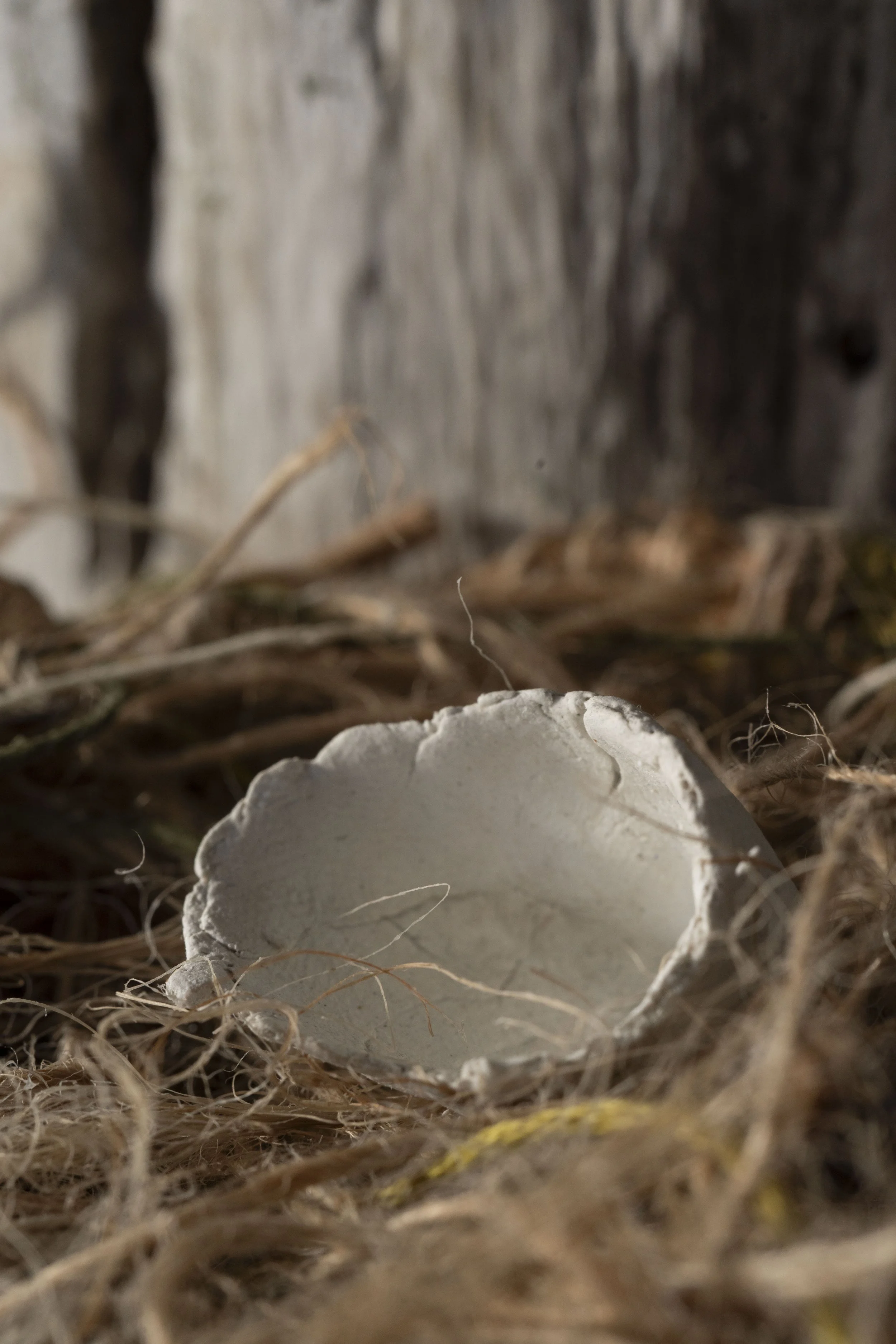
Mixed media by Jenna Gonzalez
After my divorce, and after the last of my three children moved out, I sold the family home and just about everything I owned.
I emptied a four-thousand-square-foot house and moved into a small one-bedroom apartment on a horse farm. Everything I kept, with the exception of my studio and art supplies, fit into four large plastic bins.
It felt like liberation.
Lightness.
A clean slate.
I worked around the farm to help with the rent. The work began at six in the morning, which left the rest of my days and nights open. I spent that time in my studio in Bantam, where I also ran a tiny gallery.
I met so many artists there. I began to understand how much I loved curating work for other people—how much I loved learning about an artist and then finding a way to help others see what I saw.
Many of those artists would eventually follow me to a mano.
The farm gave me something else, too.
There were days of walking through waist-high wildflowers, making friends with the horses, and watching the seasons change. Life was slow and quiet.
Four years after suffering a stroke, I was only beginning to feel fully recovered. The slow rhythm of the farm, the time in my studio, and the room to breathe were helping me find myself again.
I had plans for that life.
I imagined a small studio where I could make my work, teach, facilitate therapeutic art, and continue building a life centered around creativity. It wasn’t an extravagant dream.
It was a quiet one.
And it finally felt within reach.
Then life shifted.
My mother’s health reached a point where I knew she needed me. I made the decision to leave the farm and move an hour away into the house where she lived.
I don’t think there was ever another answer.
It wasn’t the life I had imagined.
It was the right one.
But moving into my mother’s house was more complicated than simply changing addresses.
It was a house I had left when I was thirteen. Returning brought me closer to parts of my life I had spent years learning how to carry. I wasn’t prepared for how much of the past the house still held.
I spent the better part of a year creating an apartment and studio for myself. I wanted one part of the house to feel entirely new.
Somewhere I could close the door and begin again.
But a door can only separate so much.
On the other side was my mother and everything she needed from me. Even when the door was closed, I couldn’t always quiet the part of me that was listening for her.
While I was trying to create a life for myself inside that house, the opportunity to open a gallery appeared.
Originally, I imagined my own studio in the back, with a small gallery and shop in the front. But the more I looked at my new life, the more I realized that wasn’t going to happen.
If I was going to say yes to caring for my mother, I needed to find another way to say yes to myself.
Looking back, I wasn’t trying to become a gallery owner.
I was trying not to lose myself.
I know myself well enough to understand something that probably isn’t healthy.
I have the ability to disappear.
Left to my own devices, I can spend weeks, even months, inside my own world. I don’t need much company. I can convince myself I’m perfectly content without seeing another person.
It’s a dangerous superpower.
The studio I created at home was beautiful, but I couldn’t find my way into the work.
My head was dizzy with the house and my mother. I would walk into the studio with every intention of making something, but I couldn’t find a thread to pull.
I would spend the day working, only to watch every piece turn black. Before leaving the studio, I would whitewash them all so I could try again the next morning.
It wasn’t that I had run out of ideas.
I had lost the quiet inside myself where those ideas could take shape.
The drive to the gallery became a kind of meditation. The farther I traveled from the house, the more I could feel something in me begin to soften.
Every morning at the gallery began the same way.
I would unlock the door, light the sage, and stand quietly while the smoke drifted through the room. Only then would I turn on the lights.
What no one could have known was that I needed that ritual every bit as much as they did.
At home, there was always something that needed my attention before I could give any to myself.
At the gallery, I could breathe.
I could listen.
I could remember the creative, strong version of me.
The artists helped me remember her, too.
Some had known me during those years in Bantam, when I was just beginning to understand my love of curating. Their willingness to follow me to a mano reminded me that the creative life I had built at the farm had not disappeared entirely.
It had come with me.
People often thanked me for creating a welcoming space.
What I rarely told anyone was that the gallery was welcoming me, too.
The drive home was different.
I could feel the weight of everything slowly returning. By the time I pulled into the driveway, I would go over the successes of the day in my head.
A conversation with an artist.
A problem I had solved.
A moment when I felt capable and connected.
I repeated them to myself as a reminder.
I’m still here.
I’m still connected.
I’m not totally lost.